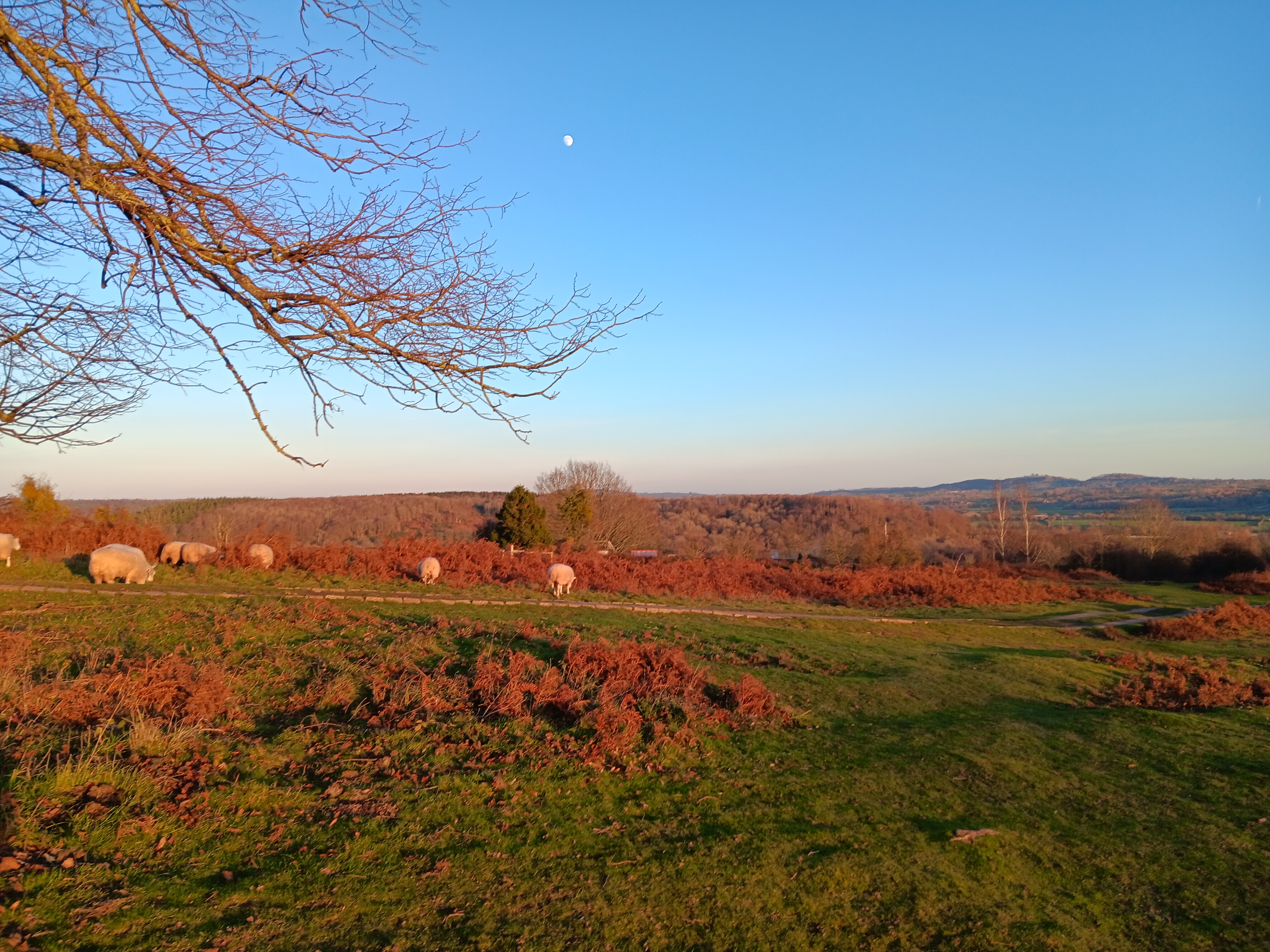
My memories of bonfire night as a child are of being bundled up in a hat, scarf and gloves. I remember huddling in the cold of my grandparent’s garden, awaiting the magic of a Catherine Wheel. The memory of the November cold is ingrained for me.
But now, fireworks night is fairly mild. This year broke records, with overnight temperatures as high as 14.4C. This discrepancy is something I don’t just notice, but one I experience as a form of loss. It’s been a while since I last wrote about climate change in an overall sense. But for a while now I’ve been sitting with the reality of what it means to live through crossing 1.5°C degrees, and it feels important to think that through that more intentionally here.
Breaking the wrong records
We are breaking all the wrong records, and will continue to. Global greenhouse gas emissions reached 57.7 GtCO2e in 2024, a 2.3% increase from 2023. (UN Emissions Gap Report, p12). The warming rate itself is accelerating: from 0.18°C per decade historically to 0.27°C now (and potentially as high as 0.4°C when natural variability is removed). (Parasol Lost, p14)
At this rate, 1.5°C above pre-industrial temperature levels will be reached within the next decade. We’re at 1.41°C of warming as of October 2025. And we have already temporarily exceeded 1.5°C for the first time (in 2024).
1.5°C is significant. The internationally-agreed 2015 Paris Agreement aimed to limit warming to 2 degrees, and “pursue” limiting it to 1.5°C. The difference between 1.5°C and 2°C was well documented in an 2018 IPCC special report. The best visuals of the difference remains this New York Times article.
Reaching 1.5°C will make our world more dangerous. I will find it personally sad to live through the milestone, having been part of a movement shaped by it. It will not be the first time that we surpass a marker like this. 350.org is a campaigning website named after the aspiration to limit greenhouse gases to 350 ppm (parts per million). We’re now at 427.49 ppm.
Anticipating 2 degrees
We will also break 2 degrees. Under current policies, we have only an 8% chance of staying below 2°C warming. (UN Emissions Gap Report, p21). By 2050, central projections suggest there’s a 21-33% chance warming already exceeds 2°C. (UN Emissions Gap Report, p58).
This isn’t reason to despair. Before the Paris Agreement, expected warming by 2100 was nearly 4°C. It is now just below 3°C under current policies. Solar, wind, and electric vehicles have exceeded even optimistic projections. We are now at the start of an electrotech revolution. The future is always unprecedented.
Fragility & tipping points
One of the concerns about reaching 1.5°C is entering the ‘danger zone’ for climate tipping points – thresholds beyond which changes become self-reinforcing and potentially irreversible. Ice sheets collapsing. Permafrost releasing methane. Amazon dieback. Ocean circulation changes. These can interact to form tipping cascades, where one element destabilises another, accelerating both warming and impacts.
Existing climate impacts are already making decarbonisation harder. The 2024 heatwaves pushed up electricity demand for cooling; without these events, fossil fuel electricity generation might have remained flat – instead, it increased. (UN Emissions Gap Report, p30)
A stable climate is the premise on which we have built our infrastructure and economy. Our systems designed for efficiency now face cascading failures. Our agricultural systems are losing their reliability; our economic models are meeting degrading natural systems they aren’t equipped for.
Readying for a new world order
All of this is happening in a context where world leaders are acting to replace the power of law with “the law of power”. The political momentum of 2019 has dissipated even as the physical reality has accelerated.
When I was writing about climate grief in 2021, I felt an acute sense of watching the future foreclose. Knowing that I will live in a context where the global climate will destabilise across my lifetime felt inconceivable.
That’s not a reality you can affix yourself to. There are months at a time when I dissociate from it.
Instead, I try to orientate myself around tomorrow. Tomorrow is a place where love still has work to do. Tomorrow is a place we’re making with each choice about what we tend, what we nurture, and what we hold as sacred.
I will live through 1.5°C. I will watch more records break. But mild November nights don’t have to be only loss – they can also be a reminder of what still needs tending.
 thejoyofrachel