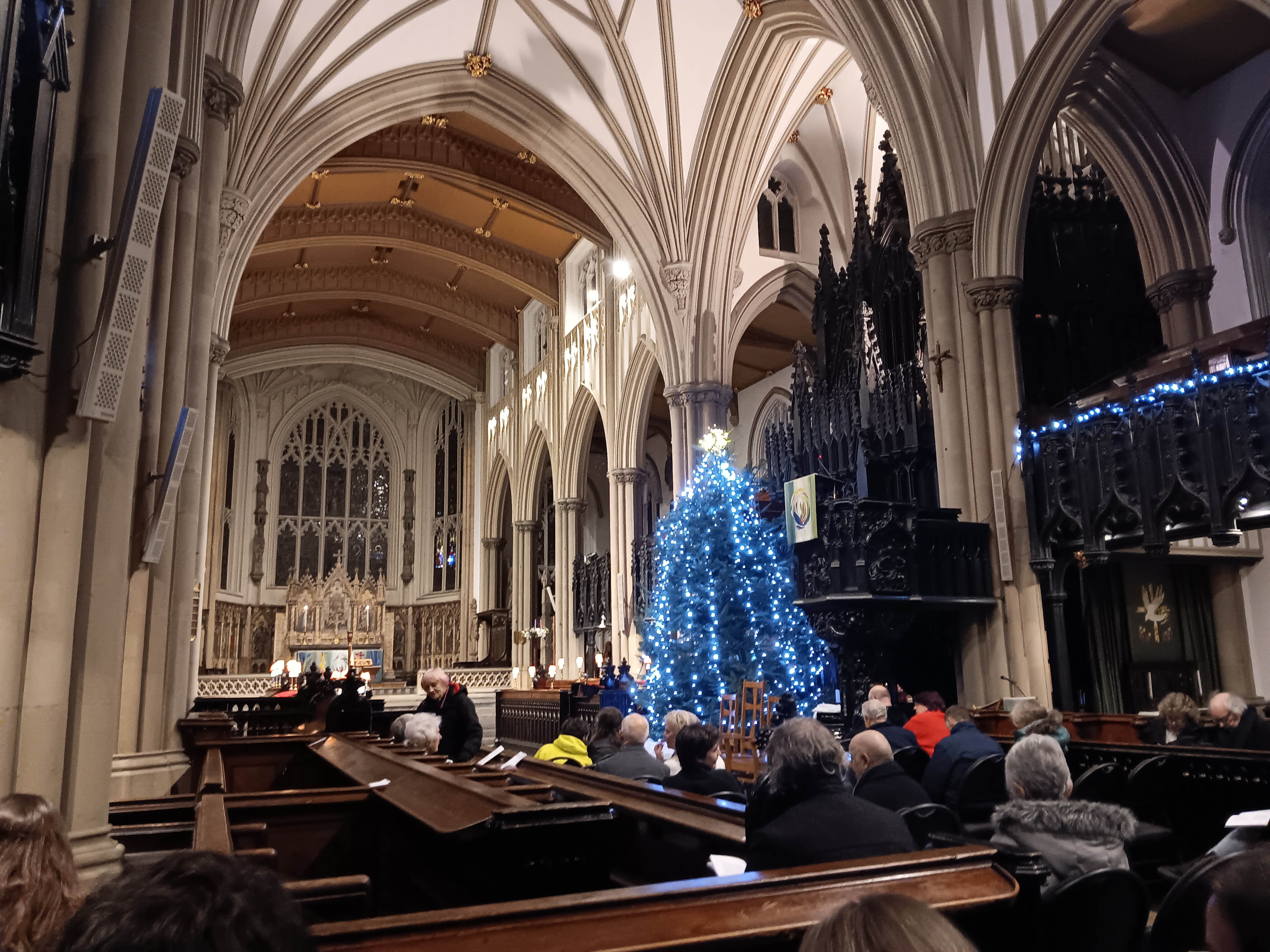
Where should we go looking for God?
Advent means the “coming” or arrival of God. It’s a season of fasting in the church, one of waiting and anticipation. We await God’s arrival.
So, where should we wait for him?
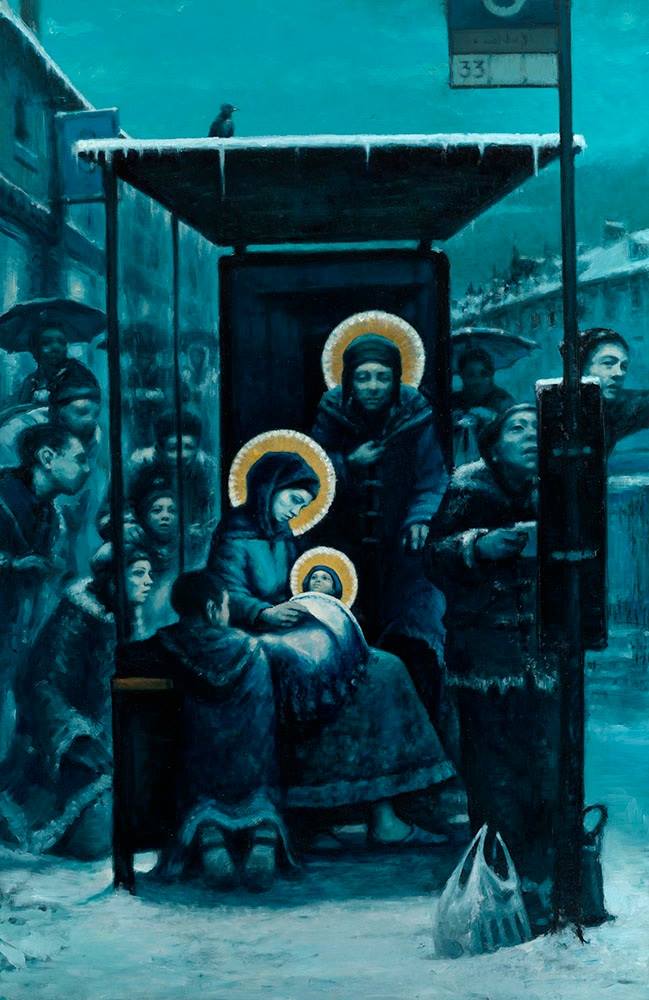
This is a painting by Andrew Gadd. It’s called, Bus Stop Nativity. It depicts the Holy Family huddled together at night under a bus shelter, trying to stay warm. Some passersby look on; others go about their business.
In the BBC article about this painting, Mr Gadd is quoted as saying: “The bus stop when simplified is like a stable. It is after all a shelter – a place people go to but never want to be.”
I think this is exactly right. God shows up in the places people go to but never want to be.
Mary’s Magnificat in Luke 1 is the longest passage spoken by a woman in the New Testament. It’s a passage that is revolutionary. It exclaims:
“My soul glorifies the Lord
47 and my spirit rejoices in God my Savior,
48 for he has been mindful
of the humble state of his servant.
From now on all generations will call me blessed,
49 for the Mighty One has done great things for me—
holy is his name.
50 His mercy extends to those who fear him,
from generation to generation.
51 He has performed mighty deeds with his arm;
he has scattered those who are proud in their inmost thoughts.
52 He has brought down rulers from their thrones
but has lifted up the humble.
53 He has filled the hungry with good things
but has sent the rich away empty.
54 He has helped his servant Israel,
remembering to be merciful
55 to Abraham and his descendants forever,
just as he promised our ancestors.”
Verses 51-53 in particular have been a source of strength and encouragement to those who find themselves oppressed and abused. The coming of God is not for the powerful, but the powerless.
A lovely illustration of the promise advent makes, of God’s coming, is available on instagram. Each year now, I follow along with the “alternative advent” account. It takes news photos from the year and overlays them with advent scriptures.
Because God shows up in the places people never want to be.
There’s a famous quote that art should “comfort the disturbed, and disturb the comfortable”.
So it should be with advent.
Look again at the painting. There are people wanting to be elsewhere, with somewhere to be. The Holy Family sits in the shelter, and most people just keep walking.
This is the pattern of the incarnation. God arrives at the margins, and the powerful miss it entirely.
It’s also the pattern of another famous story, one we usually call the Good Samaritan. A man is abused and left for dead on the side of the road. A Levite and a priest walk by, on the other side of the road. A Samaritan tends to the man and pays for his care.
The typical reading of the Good Samaritan is one of ‘charity and kindness from unexpected places’. But in the telling of the story Jesus doesn’t call the Samaritan good. The Samaritan only does what should be done for a man who has been abused and left for dead.
Really, the heart of the story is about the priests, the religious people, failing a vulnerable person in need. This is how Andrew Graystone, the whistleblower on the John Smyth case, retells it.
Graystone suggests the name “Good Samaritan” is telling of where we would like the focus to be – on the surprise helper rather than on the failing leaders. A better name would be: “The Story of the Bad Priests”.
The priests in the story felt they had important duties elsewhere to attend to. They went looking for God in familiar places, in comfortable places. They spent time in places that didn’t challenge their systems or threaten their status. Like the people in the painting, they kept walking.
But Advent tells us that we should expect God on the roadside and at the bus stop. That God will reside with the outcast. Where should we look for God? In the places that challenge our comfort, where we must forsake our power.
God is at the bus stop.
Graystone speaks very articulately about the dynamics which keep institutions from tending to those who are hurting in “Why Good People in the Church Look Away: Abuse, Power, and Protecting the Mission“. I recommend a listen.
 thejoyofrachel